


Why the Gender Wage Gap Is Fueling a Wave of Women Entrepreneurs
The gender wage gap doesn't just shrink paychecks — it's pushing women, especially women of color and mothers, out of corporate jobs and into businesses of their own, which is a big part of why most of King's Dream's clients are women.
The Wage Gap, By the Numbers
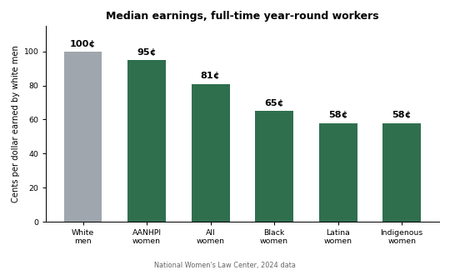
Women working full-time, year-round still earn 81 cents for every dollar a man earns — a gap that costs the average woman $13,570 a year, and roughly $542,000 over a 40-year career. Widen the lens to include part-time and part-year workers, and the overall gap opens up further, to 76 cents on the dollar.
For women of color, the gap is deeper still. Compared to white men working full-time, year-round, Black women earn about 65 cents on the dollar, Latina women 58 cents, and Indigenous women 58 cents — annual losses ranging from roughly $28,000 to nearly $34,000. Asian American, Native Hawaiian, and Pacific Islander women fare better on this measure, at 95 cents on the dollar, though the picture varies widely within that group. These aren't small rounding errors. They compound year after year, and they shape real decisions about how women build a career, and increasingly, whether to build one inside a company at all.
Why So Many Women Are Choosing to Work for Themselves
Women make up 44% of the global workforce but hold only 31% of vice-president-level roles and above. When the pay gap and the promotion gap show up in the same organization, the message a lot of women hear is that the ceiling isn't just low; it's fixed. So they leave and build their own.
The numbers back that up. Women started roughly half of all new businesses in America in 2024. Women-owned businesses grew 12% between 2022 and 2025, nearly double the growth rate of businesses owned by men, and women now own more than 40% of all U.S. businesses — over 12 million of them, employing 12.6 million people and generating $2.8 trillion in revenue. When women who've leaped are asked why, the top reasons aren't exotic: 75% want to be their own boss, 62% want control over their schedule and how they work, and more than half are building toward financial assets a paycheck alone wasn't getting them. Ownership, in other words, isn't a fallback. For a lot of women, it's the more reliable path to the things a fair workplace was supposed to offer in the first place.
Women of Color Are Leading the Surge
Black women are now the fastest-growing group of entrepreneurs in the country. Black-women-owned employer businesses grew 13% from 2024 to 2025, with a similar 13% growth rate among Black-women-owned businesses with no employees — both far outpacing the 4.4% growth seen across all women-owned businesses over the same period.
That surge tracks closely with what's happening — and not happening — inside corporate America. Black women earn about 70 cents on the dollar compared to white men, versus 83 cents for white women, and for every 100 men promoted into manager roles, only 60 Black women are promoted — the lowest rate of any group of women. Therapists and researchers who study the trend describe entrepreneurship as a way Black women reclaim agency and financial mobility that corporate systems too often withhold, and build workplaces where their culture, wellness, and purpose don't have to be set aside to be taken seriously. It's a hard-won kind of progress: many of these businesses start as sole proprietorships, with less access to capital and less of a cushion if something goes wrong — which is exactly where the right guidance and infrastructure make the difference between a side hustle and a business built to last.
Mothers and Heads of Household, Building on Their Own Terms
A lot of the women behind these numbers aren't just navigating a wage gap — they're the ones a household depends on. Roughly 41% of mothers are the sole or primary breadwinner for their family, earning at least half of total household income, and Black mothers are more than twice as likely as white mothers to be that primary source of support.
For a mother who is also the head of her household, a corporate job with a fixed schedule, a distant boss, and a pay gap baked into the offer letter isn't just frustrating — it's a structural mismatch with what her family actually needs. Owning a business doesn't make the hours shorter, but it puts the choices in her hands: which hours, which clients, which risks are worth taking, and what the business is ultimately building toward. That's a meaningful trade for a lot of women, and it's a big part of why the fastest growth in entrepreneurship is happening exactly where the wage gap bites hardest.
Why Most of Our Clients Are Women — and Women of Color
We see this pattern in our own client base, and it's not a coincidence. Most of the business owners who come through King's Dream's doors are women, and a large share are women of color — people who didn't leave the workforce because they lacked ambition or ability, but because the workforce wasn't built to reward either fairly. They come to us already carrying the hardest part: the decision to bet on themselves.
That's exactly why we built King's Dream the way we did: not as a generic consultancy, but as a partner that understands the specific hill these clients are climbing — the financing gaps, the lack of a corporate safety net, the juggling act between running a business and running a household. When most of your clients are solving that same problem, you build your services around it.
The Bottom Line
The wage gap didn't close on its own, and it isn't going to. But it is reshaping who owns businesses across the country — and that shift favors the women and mothers who decided a fair shot was worth building themselves.
If you're a woman thinking about making that leap, or you already have and need a partner who understands exactly what you're up against, reach out to King's Dream. This is the work we were built for.
The Local Mogul is King's Dream Business Consulting's blog, covering the people and small businesses building our local economies.


Comments